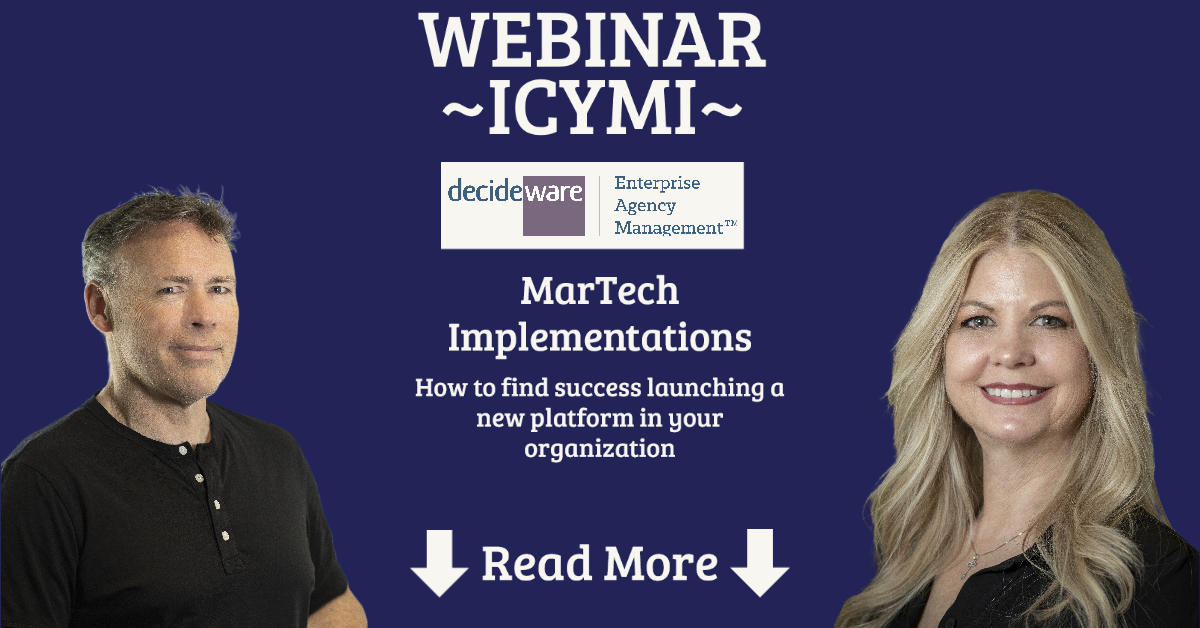
ICYMI - Decideware Webinar Key Takeaways - MarTech Implementations March 16, 2023 at 4:30 PM Read more
Celebrating 2022 Decideware Scholarship Recipients @ Michigan State University AD+PR May 4, 2022 at 3:00 PM Read more
Ed McFadden on AdWeek's "What Do CMO's Actually Want in an Agency?" March 18, 2022 at 3:00 PM Read more
Women of Influence insight series in partnership with Producers & Procurers iQ - Part 2 November 9, 2021 at 11:19 PM Read more
Decideware is a proud sponsor of the Women of Influence insight series in partnership with Producers & Procurers iQ October 19, 2021 at 12:39 AM Read more
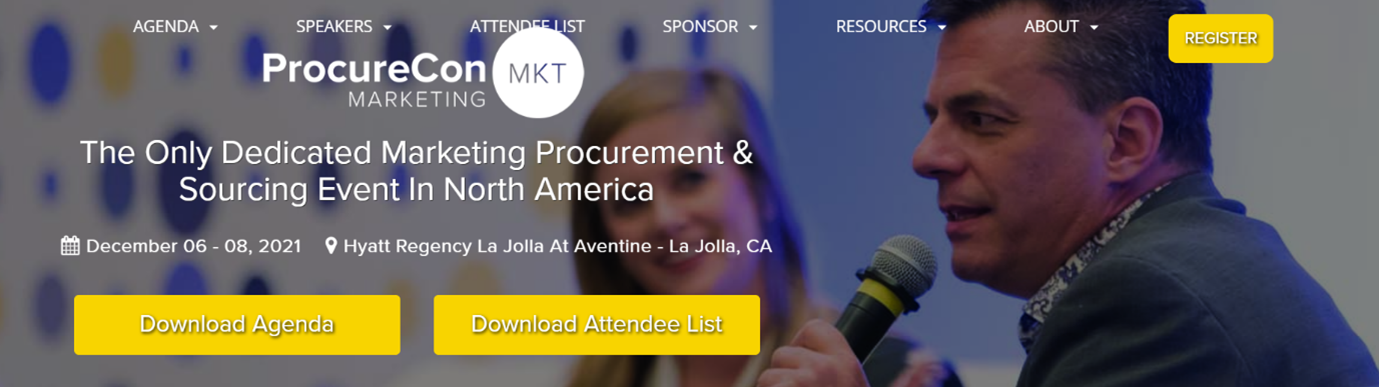
Decideware Continues Long Relationship with ProcureCon Marketing September 27, 2021 at 12:48 AM Read more
Decideware is Growing - Adding a New Production Manager Client ... July 8, 2021 at 12:28 AM Read more
Advertising Conferences are Bringing Peers and Agencies Back Together Again ... June 28, 2021 at 11:54 PM Read more
The ANA & Ford & Decideware – Webinar; Ford’s Journey in Automating their Agency Management Process April 28, 2021 at 8:47 PM Read more
Decideware’s Client Summit – "Enabling Diversity, Equity & Inclusion Programs" April 5, 2021 at 6:35 PM Read more
Decideware and Pfizer to feature at ProcureCon (US) Marketing Summit November 19, 2020 at 12:50 AM Read more
ProcureCon Marketing Webinar Series: Bayer's Procurement Automation Journey October 27, 2020 at 2:23 AM Read more
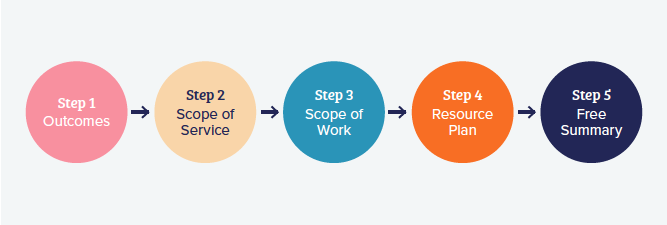
Join us for the ANA hosted webinar on the 5 Steps to Establish a Strategic Production Spend Management Program ... September 16, 2020 at 6:57 PM Read more
"The COVID-19 Production Playbook: What Brands Need to Know About Post-Lockdown Production" ... August 13, 2020 at 6:30 PM Read more
How to Build a Global Marketing Procurement Model during a Pandemic ... August 7, 2020 at 4:56 PM Read more
Sopan Shah, CPO at IHG to open the ANA's 2020 Advertising Financial Management Conference ... July 29, 2020 at 11:44 PM Read more
Decideware partners with WBR to bring ProcureCon Marketing, Virtual Event, 25 June, 2020 June 11, 2020 at 2:01 AM Read more
How to Organise Teams for Scoping Season Success. An ANA Forward magazine article. June 1, 2020 at 10:02 PM Read more
Announcing the 2020 Decideware Advertising Management Scholarship at MSU, Inaugural Recipients April 27, 2020 at 7:58 PM Read more
The 4-Step Process to Developing a Marketing Procurement Data Strategy January 19, 2020 at 8:03 PM Read more
ANA Webinar: Deliver Value Beyond Savings: Helping Marketing Achieve Objectives Using Optimized Agency Management July 17, 2019 at 11:04 PM Read more
In-House vs External Agency Evaluation - Is there a double standard? May 28, 2019 at 6:40 PM Read more
ANA's Advertising Financial Management Conference & Our Deep Partnership March 31, 2019 at 6:28 PM Read more
Decideware congratulates Raja Rajamannar from Mastercard for being named WFA Global Marketer of the Year, 2018 March 11, 2019 at 10:06 PM Read more
All aboard? Why it's critical you have a formal on-boarding program!!! January 31, 2019 at 11:48 AM Read more
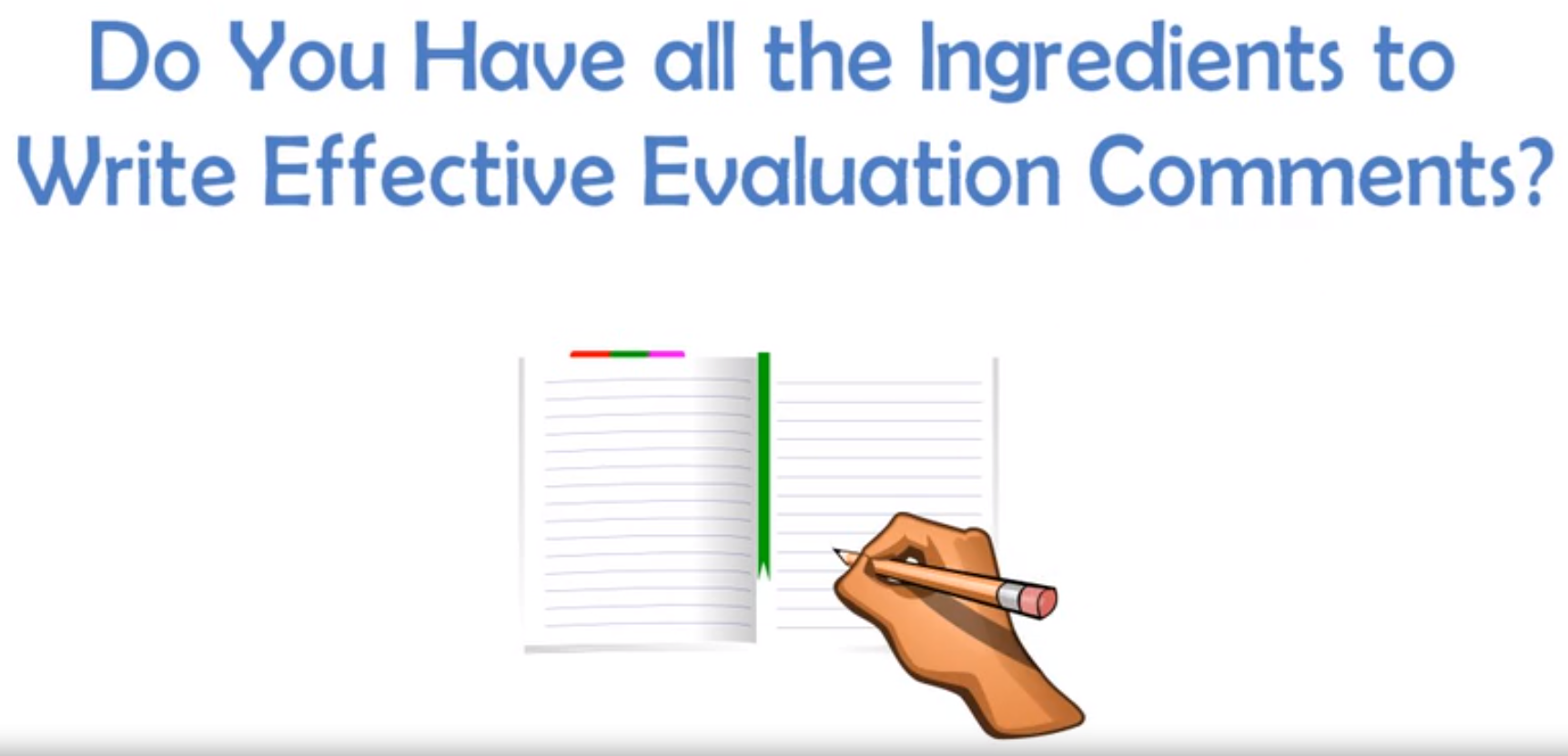
Do you have all the ingredients to write effective agency evaluation comments? A Decideware Snippet January 23, 2019 at 10:43 AM Read more
Treble & Bass...are you getting your scope of work mix right? A Decideware Snippet January 15, 2019 at 9:54 AM Read more
Will you avoid the agency evalaution 360-feedback "black hole"? A Decideware Snippet January 9, 2019 at 8:30 PM Read more
How to keep your agency evaluation program relevant! A Decideware Snippet December 10, 2018 at 7:44 PM Read more
The WFA Global Marketer of the Year 2018 – Shortlist Announcement December 5, 2018 at 7:58 AM Read more
What will you take on your agency road trip? A Decideware Snippet November 29, 2018 at 5:12 PM Read more
The WFA announces the Global Marketer of the Year 2018 Award & Decideware’s Richard Benyon joins the Awards Jury November 5, 2018 at 10:28 AM Read more
Improving ROI with Business Intelligence in the Scope of Work Process - An Upcoming Webinar April 11, 2018 at 9:30 AM Read more
5 Practical Steps to Increase Control Over the Production Process and Gain Transparency March 6, 2018 at 9:30 AM Read more
Decideware to Present at Upcoming ANA Joint Production Management and Advertising Financial Management, West Coast Chapter February 22, 2018 at 11:33 AM Read more
ISBA Refers Members to Decideware to Address Production Transparency Issues February 14, 2018 at 11:01 AM Read more
With an Automated Scope of Work Program, Novo Nordisk Realized 37% Savings to Reinvest in their Brand January 24, 2018 at 9:30 AM Read more
Decideware to Present at Upcoming ProcureCon Marketing Conference November 16, 2017 at 11:00 AM Read more
Decideware to Present at Upcoming WFA Agency Evaluation Webinar September 15, 2017 at 9:29 AM Read more
Getting the Most from Agency Partners- ANA June FORWARD Article August 24, 2017 at 11:30 AM Read more
Incorporating Business Intelligence Dashboards into your Agency Management Program July 20, 2017 at 9:30 AM Read more
Decideware's "Advancing the Agency Evaluation Process", ANA Procurement Series Webinar June 21, 2017 at 9:30 AM Read more
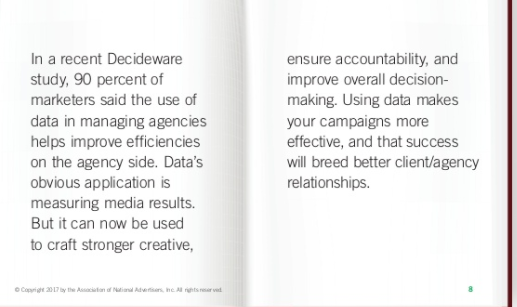
ANA/Decideware Data Survey featured in ANA Slideshow "How to Build a Better Agency Relationship" May 25, 2017 at 11:36 AM Read more
Decideware to Attend and Sponsor Upcoming ANA Financial Management Conference May 17, 2017 at 9:30 AM Read more
Decideware to participate in ANA Joint Production & Financial Management Committee Meeting February 17, 2017 at 9:45 AM Read more
Decideware client hosts successful agency partner focus groups leading to product planning ideas January 12, 2017 at 10:42 AM Read more